For a decade, QA was stuck in a paradox.
To understand why KaneAI mattered, you have to understand the gap it filled. Releases got faster. CI/CD became standard. Cloud device grids and parallel execution made running tests cheap. But the part where someone actually writes a test stayed manual and slow.
- Software releases — daily deploys, CI/CD as default
- Testing infrastructure — cloud grids, real-device clouds
- Frameworks — Selenium, Playwright, Cypress matured
- Test authoring stayed manual
- 30–60 minutes for a simple test, 1–2 days for a complex one
- Locked behind coding skills — only SDETs could automate
- 30–50% of QA time spent fixing broken tests
Test authoring couldn't keep up with feature shipping. Quality became reactive — caught after release, not before.
A QA engineer wanting to automate even a moderately complex flow had to read the user story, manually navigate the app, inspect DOM elements for stable locators, write the test as code in Selenium or Playwright, implement Page Object Models, add explicit waits and assertions, debug locally, push to source control, and then — maintain it forever. Every UI change in the product could break it. Renaming a single button class could break 200 tests overnight.
A regression suite of 200 tests was 4–6 person-weeks of authoring, before maintenance even started. The test suite became a liability — a thing engineers feared changing because the downstream impact was unpredictable. This was the world KaneAI was built into.
Simple to state. Hard to do.
The brief was clean and ambitious: let users describe what they want to test in natural language, and let AI do the rest.
No XPaths. No Selenium boilerplate. No Page Object Models. No framework lock-in. Just describe the behavior; the AI handles implementation, identifying elements intelligently, and executing on the LambdaTest grid.
Under the hood, KaneAI would still output real, exportable test scripts (Selenium, Playwright, Cypress, Appium) that engineers could read, version, and integrate into their CI/CD pipelines. We weren't trying to replace the existing testing stack. We were trying to remove the bottleneck of authoring tests inside it.
A QA engineer (or a PM, or a designer, or anyone) types something like:
"Go to amazon.com, search for wireless headphones, filter by 4+ stars, sort by price low to high, and verify the first result is under $50."
If the goal was just "build a tool that can do that," the AI capability was reachable. The real challenge was building a tool QA teams would actually trust to do that, at scale, on the test suites that protect their production environments.
The AI was reachable. The trust wasn't.
This was my first true 0→1 product. From day one, two things became clear. We were solving two problems simultaneously, and the second was harder than the first.
The product problem
"Move test authoring from manual to AI-driven."
The human problem
"Move users from manual to trusting an AI to do that automation."
Think about what you're asking a QA engineer to do. You're asking them to hand over the work that protects their product from breaking, to an AI. If that AI gets a test wrong, a real bug ships to production. If it's over-confident, users find out the hard way. If it's opaque about what it did or why, the engineer has no way to verify.
QA teams are paid to be skeptical. That's literally the job. The default mental model was: "I'd rather write 100 lines of Selenium myself than trust an AI to do it for me, because at least I know what my code does."
How do we design a product where users feel in control of the AI — not controlled by it?
Five principles. One product.
These didn't come from a wall on day one. They emerged from constant iteration with our internal QA team and pilot customers — and by the time we shipped MVP, they'd earned their place by being tested against hundreds of small decisions.
AI is a collaborator, not a black box
Every step visible, every action editable, every decision auditable.
User holds the steering wheel
AI proposes. User decides. Everything overridable.
Guardrails at every step
Stop, correct, redirect at any decision point. Slower autonomy for higher trust.
Stabilize the foundation, then stack features
Bottom-up, never top-down. Get the core loop right first.
Built for the spectrum, not the specialist
SDET to PM, same product, same experience — without dumbing down.
The fifth principle was the hardest to live up to. KaneAI had to work for an SDET who could read the underlying code, and a PM who'd never written a test in their life. One product, multiple skill levels, without dumbing down for either. That tension shows up in almost every screen of the product.
Two entry points, one authoring loop.
Most AI products hide their work behind a spinner. We did the opposite — every action the agent takes is visible on screen. The user is in the loop, not waiting outside it.
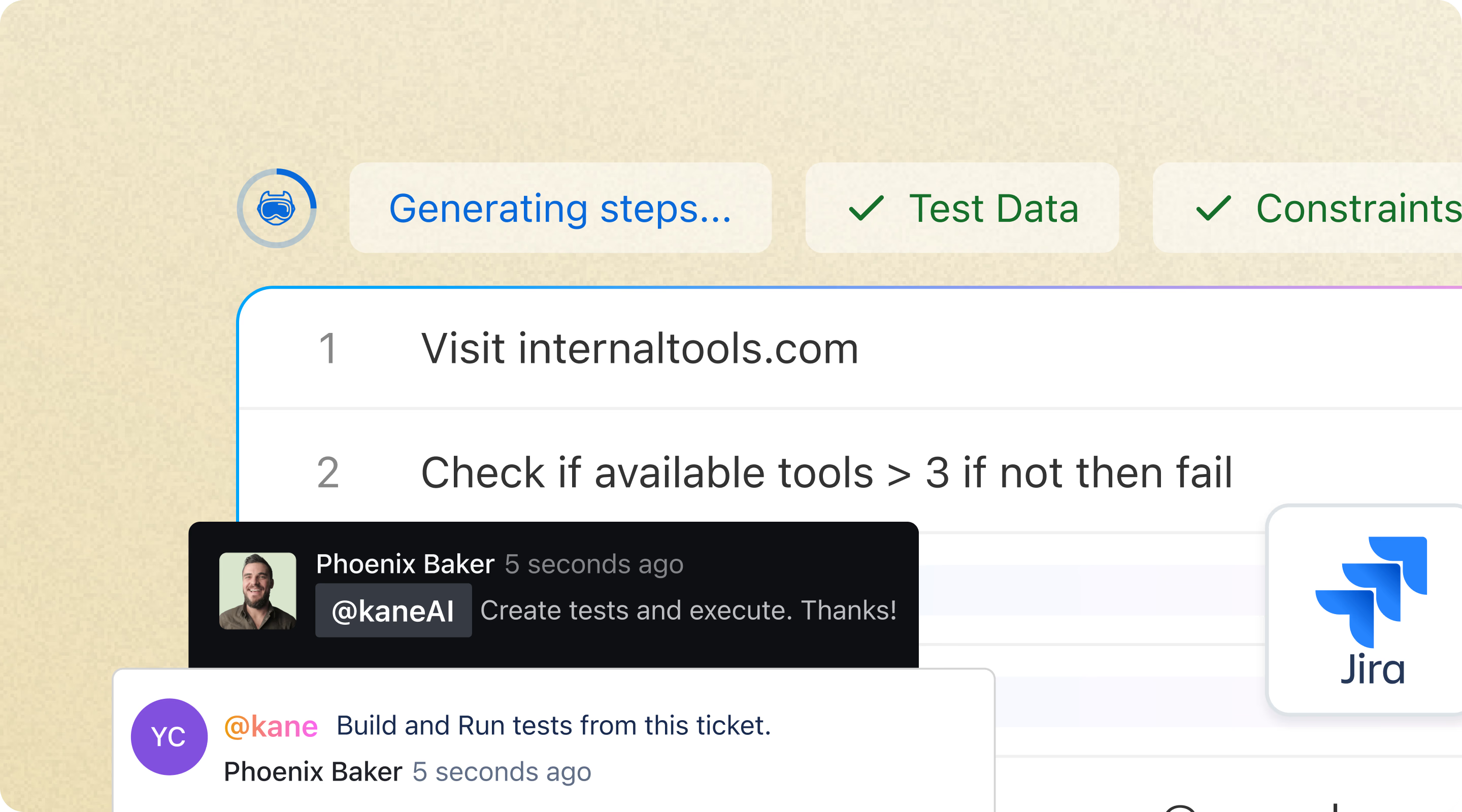
KaneAI has two ways in. Test Planner is for users who want to plan coverage before writing anything — feed it a PRD, a Jira ticket, screenshots, a feature description, even audio or video, and it produces a set of test cases that cover the feature. The Web Agent is for users who want to skip planning and start authoring directly. Either entry point lands the user in the same authoring environment. Forcing every user through Test Planner would have made KaneAI feel heavy for simple cases. Skipping it entirely would have left the most ambitious AI work on the table.
Test Planner — the strategic layer
Test Planner does the most ambitious AI work in the product.
Translating a single scenario into steps is, frankly, not that hard for a modern model. What Test Planner does is harder: it does test-case decomposition. From a feature description, it reasons about what could go wrong, what scenarios matter, where the coverage gaps are. It's the work a senior QA lead does when planning a release, compressed into something the AI can draft in seconds.
The verification question changes at this layer. Instead of "did the AI translate my scenario correctly?", the user asks "did the AI think of the cases I would have, plus ones I might have missed?" That's a more useful question to be answering, because the AI is helping with work the user couldn't do as well or as fast themselves.
The Web Agent — authoring with the page in view
The Web Agent is where the actual test gets built. The screen is a deliberate split-pane: the user's natural-language instructions and the AI-generated steps on the left, the live target application running in a real browser on the right.
As the user describes what to do — "click the search bar, type 'wireless headphones', filter by 4+ stars" — they're looking at the actual page they're describing. The element is right there. The state of the page is right there. Authoring isn't blind.
This was the single biggest trust-design decision in the product. Most AI authoring tools ask the user to describe a workflow against an abstract idea of an interface. We built it the other way: the page is in front of the user the whole time. The AI's interpretation of each step lands in real time, against the real DOM, and any mismatch is immediately visible.
In user testing, this single layout change did more for trust than any explanation copy we wrote. Users described the product as "transparent" and "honest" without us using either word in the UI. The layout was doing the talking.
Once a test is authored, the user kicks it off to run on HyperExecute — LambdaTest's existing cross-browser cloud. Authoring stays interactive and fast; execution stays parallel and infrastructure-grade. Two different jobs, two different surfaces.
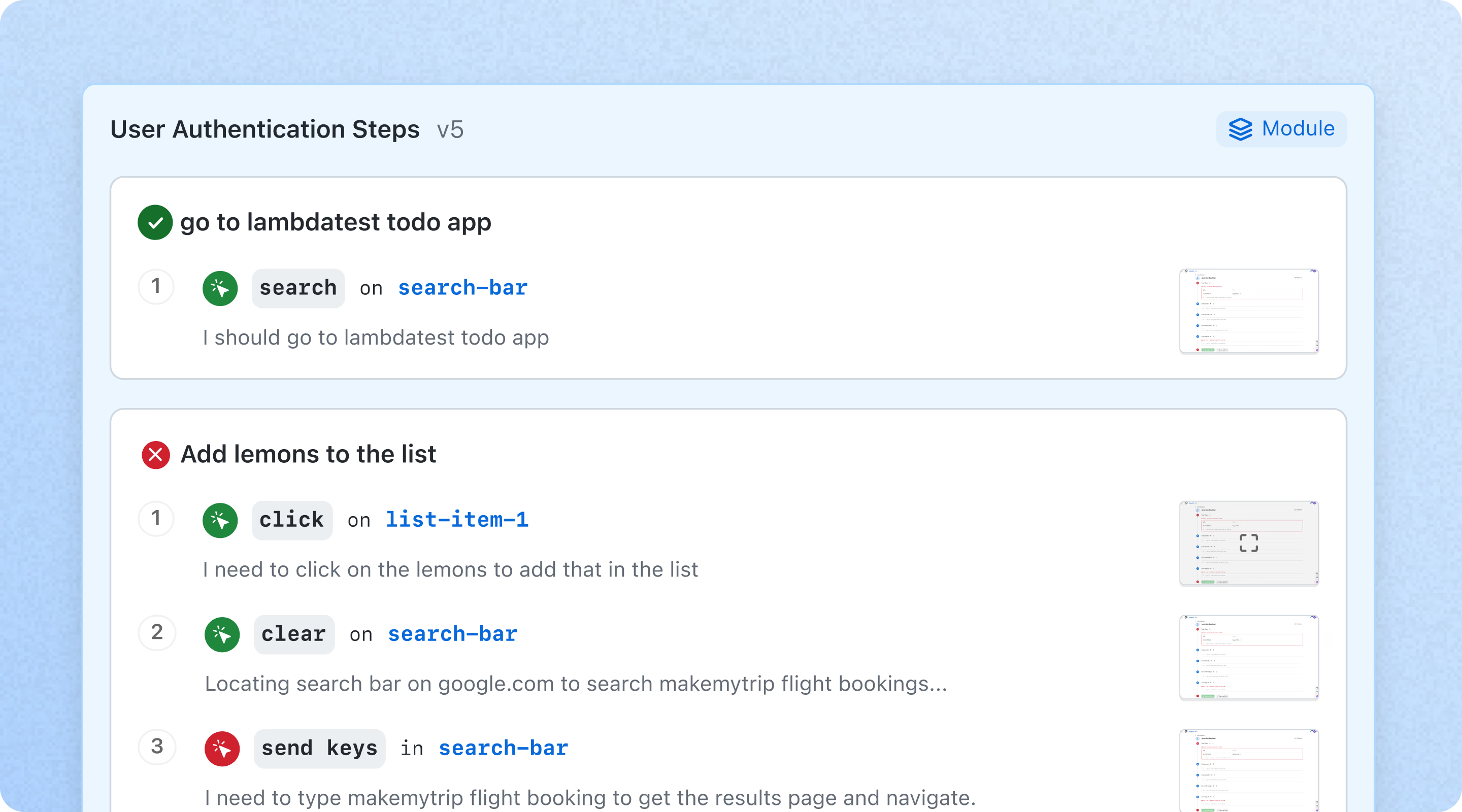
Modules — making it a real authoring environment
Reusable test components: login flows, common navigation paths, frequently-used assertions. Save them once, reuse them across tests.
This solved a major pre-AI problem (duplicated test code) and shifted KaneAI from a one-shot AI to a real authoring environment. Tests stopped being throwaway artifacts and started being a system the team could build on.
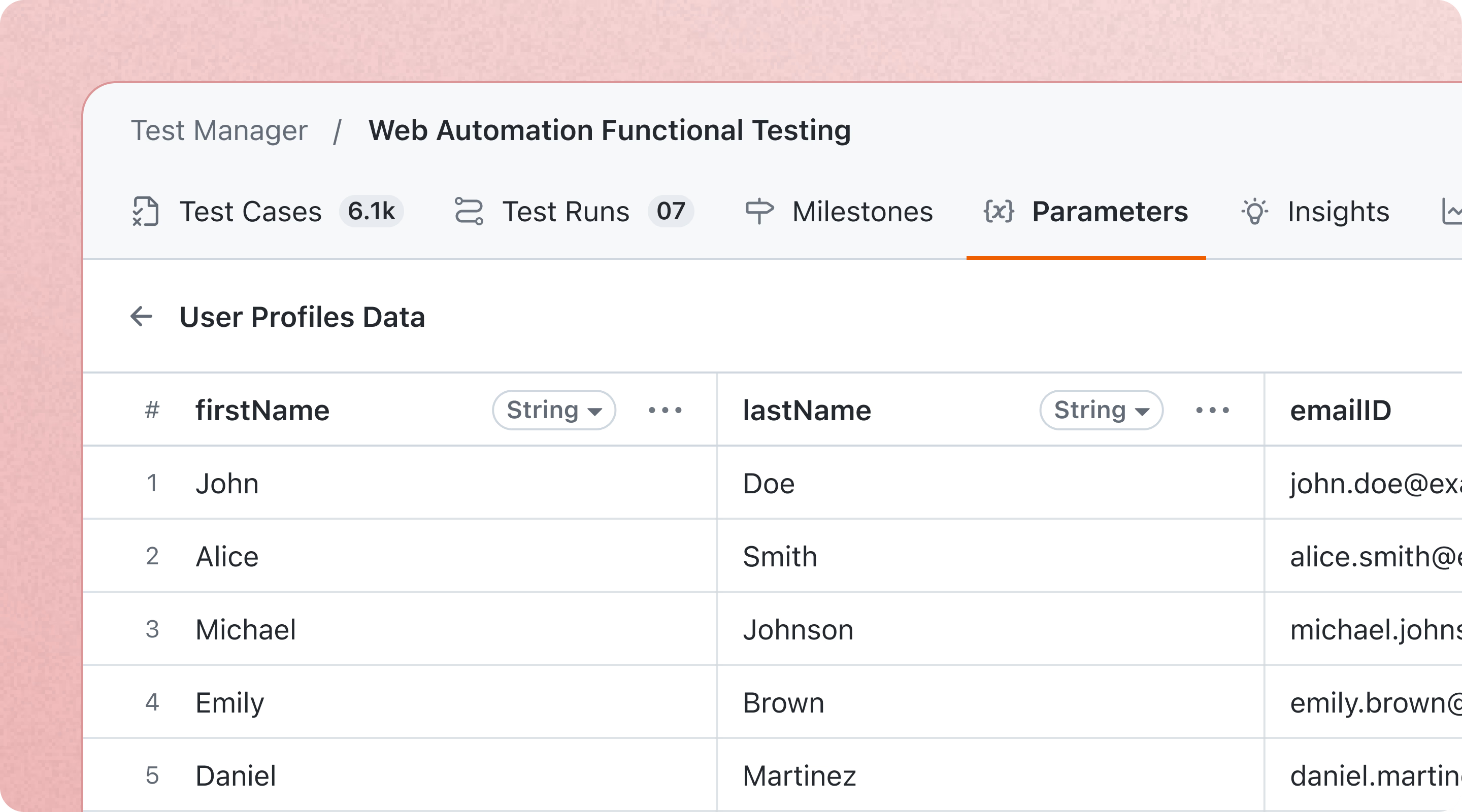
Parameters and Variables — tests as systems, not one-offs
Dynamic data inputs for flexible, reusable tests. Run the same test with different data sets without rewriting it.
Adoption hit 70% within a few months of shipping — a strong signal that users had crossed the line from "trying KaneAI for one-off tests" to "building durable test suites with it."
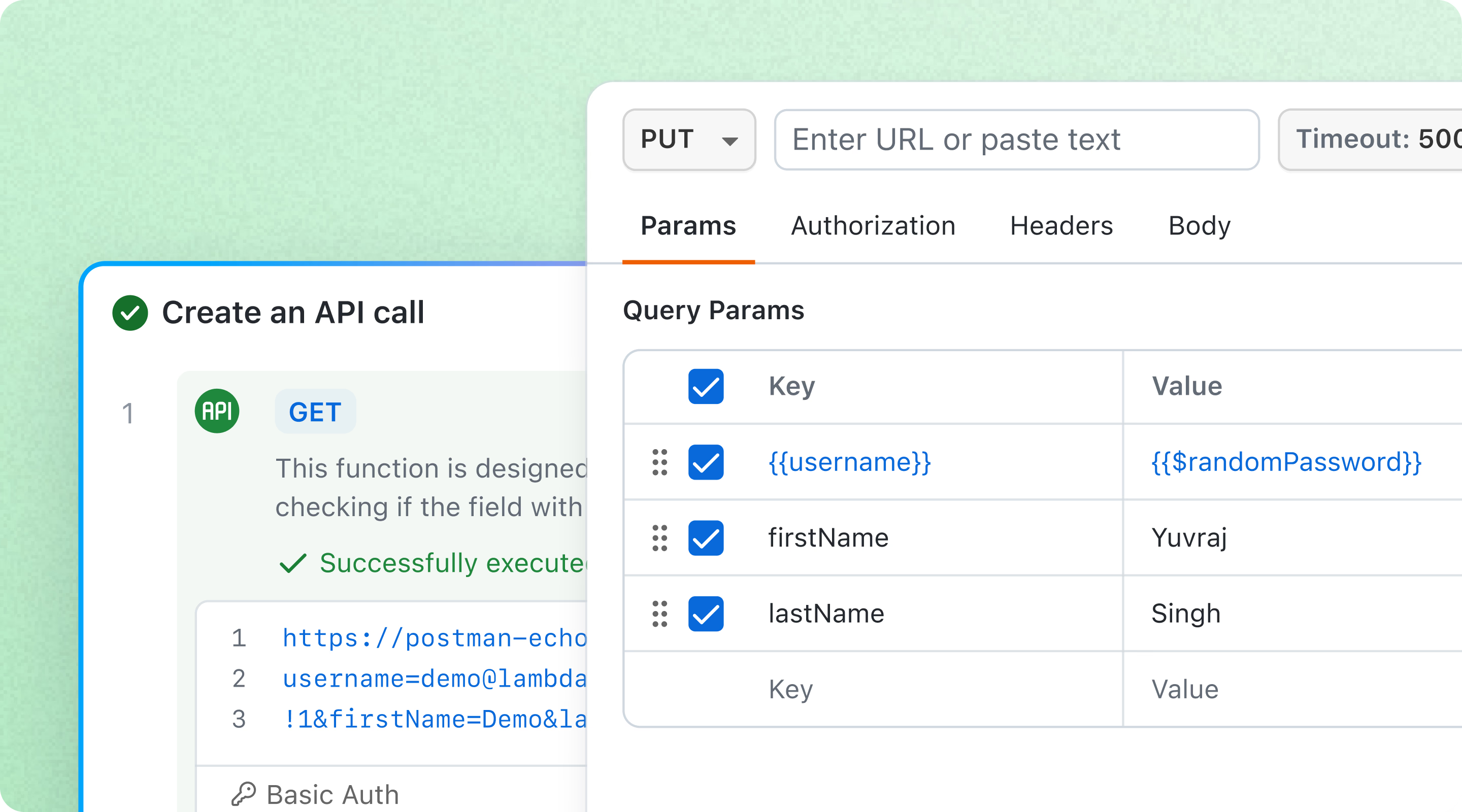
API Testing — same loop, different surface
Backend testing alongside UI testing. Validate API responses, test integrations, ensure services communicate correctly.
Designed to feel like a natural extension of the same authoring loop, not a separate product. The user describes API behavior in natural language, the same way they describe UI behavior. The product stayed coherent even as the surface area grew.
Smart bug detection — closing the loop into the team's workflow
When a failure is a real bug, the user can raise a ticket directly in Jira or Azure DevOps from inside KaneAI — pre-filled with context, ready to assign.
Most testing tools dead-end at "test failed, here are the logs." That leaves the engineer to copy-paste context into a separate ticketing tool, lose half of it in translation, and remember to follow up. Smart bug detection closed that loop. The failure went from "thing someone noticed" to "ticket assigned to the right person" without a context switch.
From AI session to a structured test case
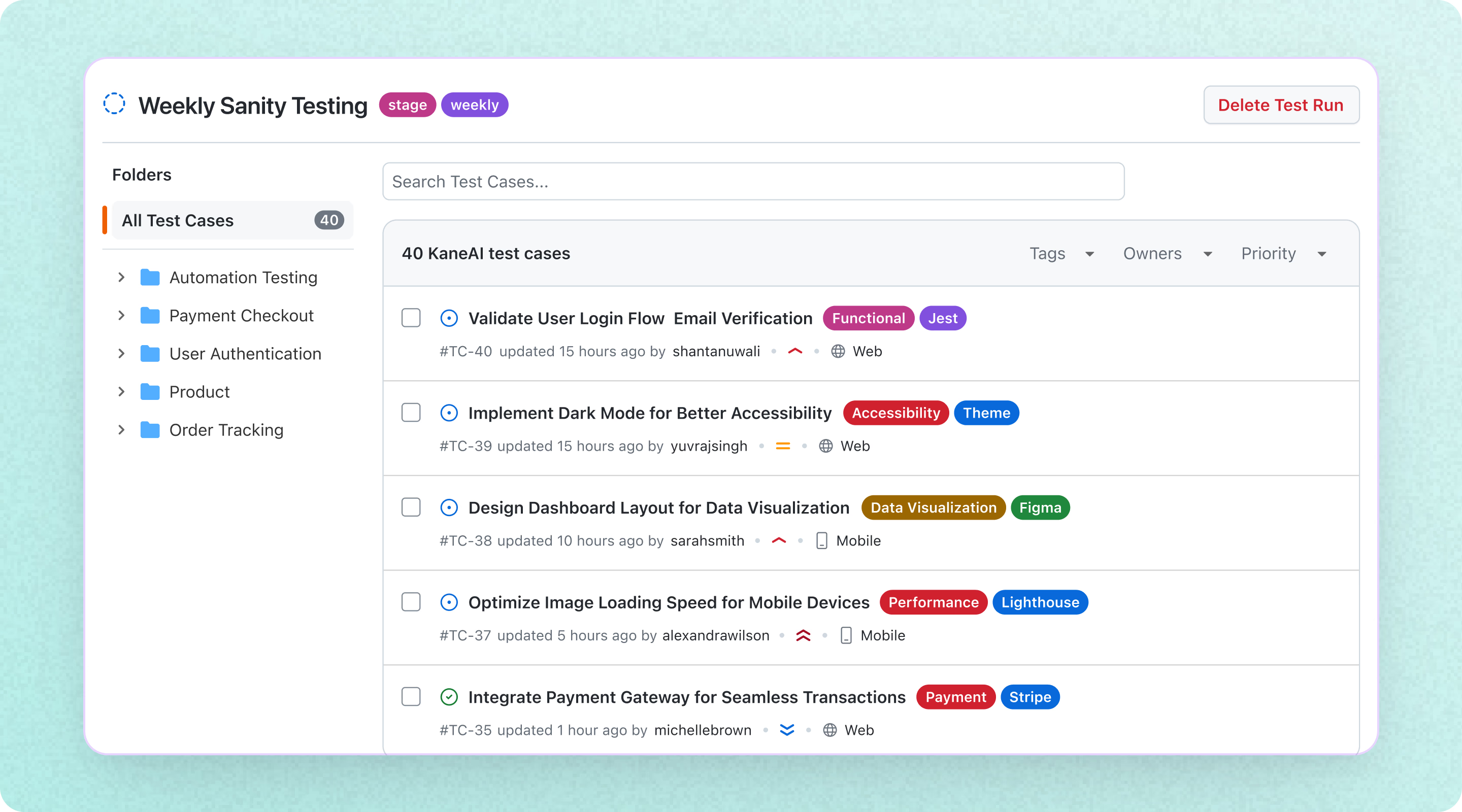
Generating a test isn't the same as owning a test. KaneAI included a deliberate handoff step: every authored test could be promoted into a structured test case with a title, description, priority, status, automation flag, tags, and linked variables. Assignable to a teammate, versioned, and queryable from the test manager.
This was the seam between "AI agent that ran something for you" and "test asset your team relies on." Without it, KaneAI would have been a clever demo. With it, the output of an AI session became something a QA team could actually live with — review, schedule, hand off, and trust six months later.
DecisionMultilingual support — a feature we didn't set out to build+
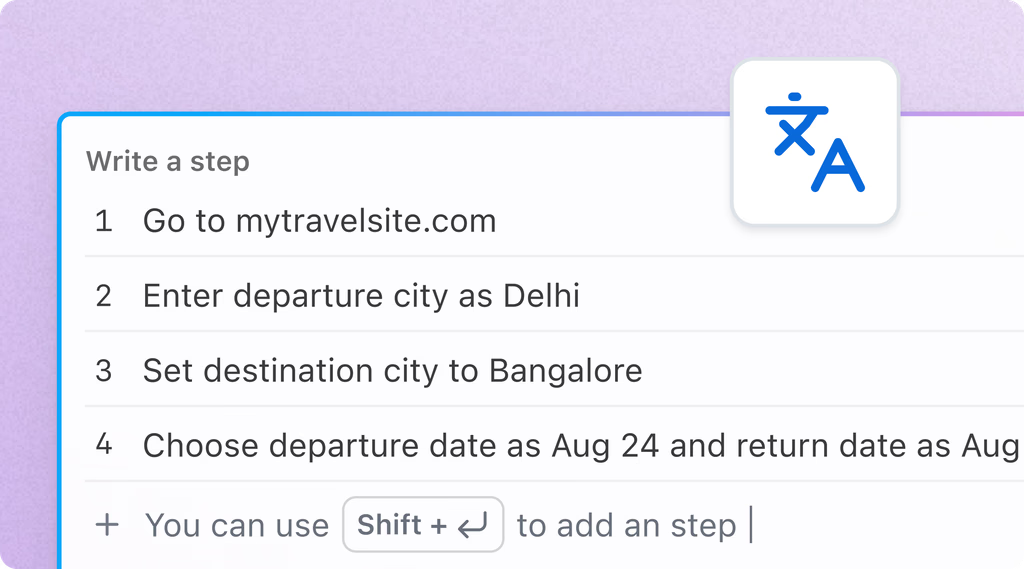
When tests are written as code, language isn't a barrier — code syntax is universal. The moment we made plain English the interface, language itself became a barrier. A QA engineer in Japan, Brazil, or Germany shouldn't have to write prompts in English to use the product, especially when the whole pitch was "anyone can author."
We tweaked our AI model to support every major language. Users could write their test intent in whatever language they thought in, and KaneAI would understand it and produce the same quality output. It was the kind of decision that showed up only because we were paying attention to who our users actually were, not who we'd assumed they'd be.
Dev tools have their own design language.
KaneAI's users weren't end consumers. They were technical practitioners — QA engineers, SDETs, developers, DevOps folks. People who already had strong opinions about their tools and very low tolerance for friction. Designing for that audience is its own discipline. It shaped a thousand smaller decisions.
- Respect the existing stack. Tests had to be exportable as real Selenium / Playwright / Cypress code so engineers could review, version, and ship them through their existing CI/CD pipelines.
- Trust the user's mental model. Files, branches, commits, modules, environments, runs. KaneAI's IA mirrored what dev users already think in — closer to an IDE than a marketing page.
- Density over decoration. Information density, keyboard shortcuts, fast navigation. Optimize for screens that show a lot of useful information without feeling cluttered.
- Errors and failures are core flows, not edge cases. A failing test is the most important moment in the product. Logs, screenshots, suggested fixes — designed with the same care as success states.
- Don't pretend the AI is perfect. Honest UI when the AI is uncertain or making assumptions. Dev users see through false confidence immediately.
Tight loops. Real users. Eat our own dog food.
A blank slate is liberating and terrifying in equal parts. Here's how we navigated it.
Working with the co-founder
I partnered closely with our co-founder on product vision, workflow definition, and system architecture. This wasn't a "design hands a spec to engineering" relationship. We worked side by side — debating product decisions, sequencing features, weighing tradeoffs in real time. The co-founder brought deep technical and strategic context. I brought the user, the workflow, and the experience design. Engineering brought the constraints and possibilities of the AI itself.
Internal QA team as continuous design partners
This was the secret weapon. LambdaTest's own QA engineers were exactly our target user. They had real pain points, real opinions, and zero patience for products that didn't earn their trust. Every iteration of KaneAI went through them first. They broke things. They asked for things. They told us when something felt wrong even if they couldn't articulate why.
Could we use KaneAI to test KaneAI?
That dogfooding loop forced us to confront product gaps from the inside. If our own QA team couldn't trust KaneAI to test KaneAI, no external customer would either. The phrase "would you actually use this on your production tests?" became a regular sanity check.
The product didn't ship in one shot. We followed a tight, iterative loop: build, test internally, ship to a small set of pilot customers, gather feedback, refine. The MVP launch on August 22, 2024 wasn't an end state — it was an inflection point. We continued building heavily through April 2025.
Discipline shipped what features couldn't.
The hardest decisions on this project weren't about what to build. They were about what to leave out — and to be specific, what to deliberately defer to ship after MVP, on a foundation users had already learned to trust.
Original vision
- Modules
- Parameters & Variables
- API Testing
What shipped at MVP
- Plain English in
- Editable, executable test out
- Visible AI reasoning
- Manual control at every step
The MVP had one job: prove that the end-to-end loop worked. If we shipped Modules without first earning trust on that core loop, we'd be asking users to invest in a system they hadn't yet decided to believe in.
All three deferred features shipped in the months after MVP, once we had real users, real feedback, and a stable foundation. By the time we shipped them, we knew exactly what shape they needed to take — because we'd watched users live without them. Post-MVP work wasn't fixes for things we'd shipped wrong. It was planned scope, deferred on purpose, shipped on schedule.
The spectrum had a ceiling — and we knew it.
The pitch was "anyone can author a test," and within authoring, that was true. PMs authored in NL, SDETs validated in code, both worked on the same underlying test. But the spectrum had a ceiling beyond authoring, and it's worth being honest about that.
Authoring opened up to non-technical users. The parts of the workflow that came after — execution configuration, debugging failures, analyzing logs, integrating with CI/CD — stayed technical. So during the beta, non-technical users could contribute to the test suite by authoring tests, but the power users who took those tests end-to-end were still SDETs and engineers.
Trade-offWhy we didn't invest in spectrum-broadening at MVP+
We made a deliberate call. We knew the post-authoring workflow was a gap for non-technical users. We could have invested in simplifying execution and analysis for that audience. But: our power users were SDETs, and they were driving revenue. Spectrum-broadening would have been another 2–3 months of design and engineering work — a different conversation about what failure surfaces look like for non-experts. A 2–3 month delay would have cost us first-mover positioning in the GenAI-native testing category.
So we shipped authoring deep for everyone, served SDETs end-to-end, and let non-technical users find their level inside the product. The 20% increase in non-technical contribution was real. But contributing meant authoring, primarily — not closing the loop end-to-end. Knowing the ceiling, naming it, and prioritizing around it was a senior call. It's a ceiling I'd want to push past in the next phase.
What shipped. What changed.
KaneAI launched MVP on August 22, 2024. The signal in the months that followed was strong, and it came from multiple directions at once.
3 months
KaneAI as centerpiece
satisfaction
authoring time
& Parameters (post-launch)
users contributing
across 4 industries
Our early adopters


The fundraise was specifically positioned around AI expansion, with KaneAI as the centerpiece. The product didn't just sell — it became the wedge that made LambdaTest's existing infrastructure (HyperExecute, the cross-browser cloud) accessible to a 10× larger non-technical user base. The AI was the new front door to an established business.
Test authoring went from being SDET-only to being a team sport.
The numbers above are the leadership-deck version. The version I care about more is qualitative: in our follow-up interviews, multiple auditors described the new product as "the first testing tool that doesn't feel like it was made by people who've never written tests." That sentence is on a Post-it on my desk.
What I'd revisit if I were starting over.
Honestly, the MVP shipped well. I'm not sitting on a list of things I'd reverse. The cuts held up, the principles held up, the post-MVP shipping plan held up. The thing I'd revisit isn't a UI decision — it's an architectural one.
KaneAI shipped as a web product. That made sense at the time. It integrated cleanly with LambdaTest's cloud grid, no download barrier for customers, faster iteration on our side, easier support story. All real reasons.
But execution speed and resource handling have always been a soft spot for web-based test automation. The browser is running inside another browser. Network round-trips happen for every action. There's no access to local resources. For users on slower networks or running heavier test suites, the cost shows up.
If I were starting over with what I know now, I'd push hard on whether KaneAI should ship as a desktop app (at least as an option) — using local browser instances, local resources, and local execution. That would have meant materially faster test runs and a tighter debugging experience.
The tradeoffs are real. A desktop app is a download barrier, a different distribution and update model, more engineering investment up front. So I'm not saying we got it wrong. For MVP, web was the right call to validate the thesis. But the right time to revisit the architectural call is post-MVP, once the thesis is validated. That's the call I'd want to test seriously now.
Seven lessons that carried over.
The product problem and the human problem are not the same.
The technology to do GenAI-native test authoring was reachable. The harder problem, by far, was getting users to feel comfortable letting it. Senior product design at the AI frontier is mostly about the second problem.
Trust is built with control, not capability.
Counterintuitively, the more powerful the AI, the more control we needed to give users. Every increase in autonomy needed a corresponding increase in transparency, editability, and guardrails.
Bottom-up beats top-down for 0→1.
We could have shipped a flashier MVP with more features. We chose to stabilize the foundation and layer features on top. That discipline is why post-MVP scope shipped cleanly instead of as fixes.
Two representations, one truth.
The single biggest leverage point in the product wasn't the AI — it was keeping natural language and code in lockstep. A pattern I'd reach for any time a product has to serve very different skill levels on the same workflow.
Know where your spectrum stops, and choose deliberately.
"Built for the spectrum" sounds clean, but every product has a ceiling. Naming it, prioritizing around it, and being explicit about who got served end-to-end was a more honest framing than pretending the spectrum was uniform.
Internal users are the best design partners.
Our QA team gave us higher-fidelity, faster-cycle feedback than any external user research could have. Same building, same target user, zero patience for products that didn't earn their trust.
0→1 stretches you in ways nothing else does.
Going from "we have an idea" to "we have a product in the market generating revenue" forced me to think beyond screens — about strategy, business outcomes, and the workflow impact on an entire industry. Product thinking, not just craft.